Second Bunch started with a simple observation: the best bananas for jam are the ones no one wants to buy anymore. We built a whole brand on that idea — and on the belief that a better product and a less wasteful world aren't in conflict.
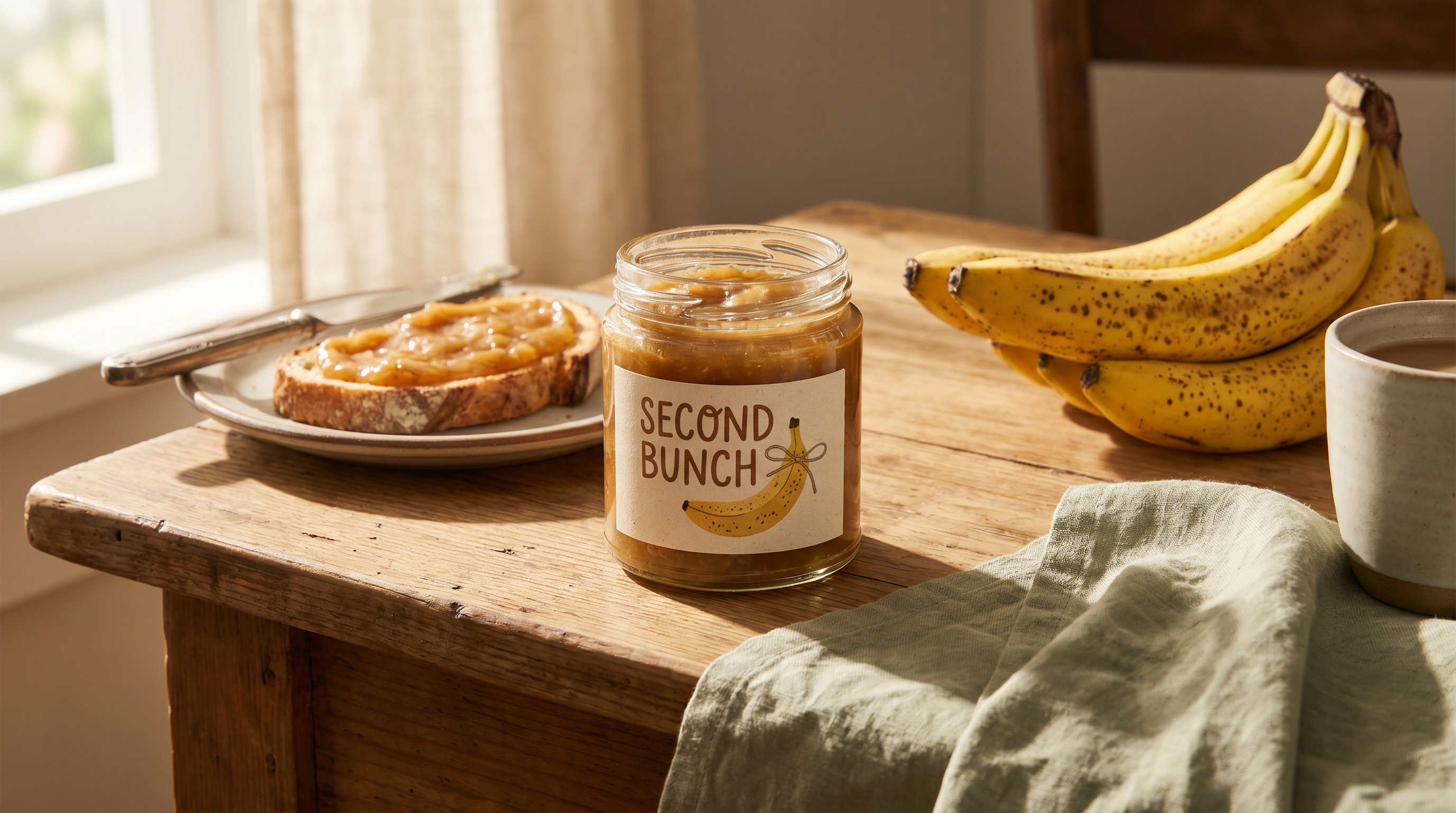
"Too ripe to toss is not a compromise.Second Bunch · Batch #001 · Portland, OR
It's the right ingredient."
Kumar and his father Prabhakar in Mallorca, Spain.
Second Bunch is a family project built around a shared obsession with not throwing good things away. Kumar trained in industrial engineering and polymer-textile-fiber engineering — disciplines that, at their core, are about minimizing waste per kilowatt-hour produced. The engineering lens was always there. So was the question: where's the waste hiding?
The answer, as it turned out, was on the kitchen counter. His father, Prabhakar, is an agricultural soil chemist with sixty years of experience — someone who thinks about the full arc of a crop from the ground up. His mother has spent just as long in the kitchen, turning raw ingredients into food that people actually want to eat.
The catalyst was a number: 30% of all bananas produced are thrown away before they're ever eaten. Most of those are discarded not because they've gone bad, but because they've gone past the window that retailers and consumers have decided looks acceptable. They're too ripe to sell. They're exactly right for jam.
So the family teamed up — an engineer who thinks in systems, a soil scientist who thinks in decades, and a chef who thinks in flavor — to build something that turns that discarded 30% into the best possible product. Second Bunch is what happens when you apply serious discipline to a problem most people just throw away.
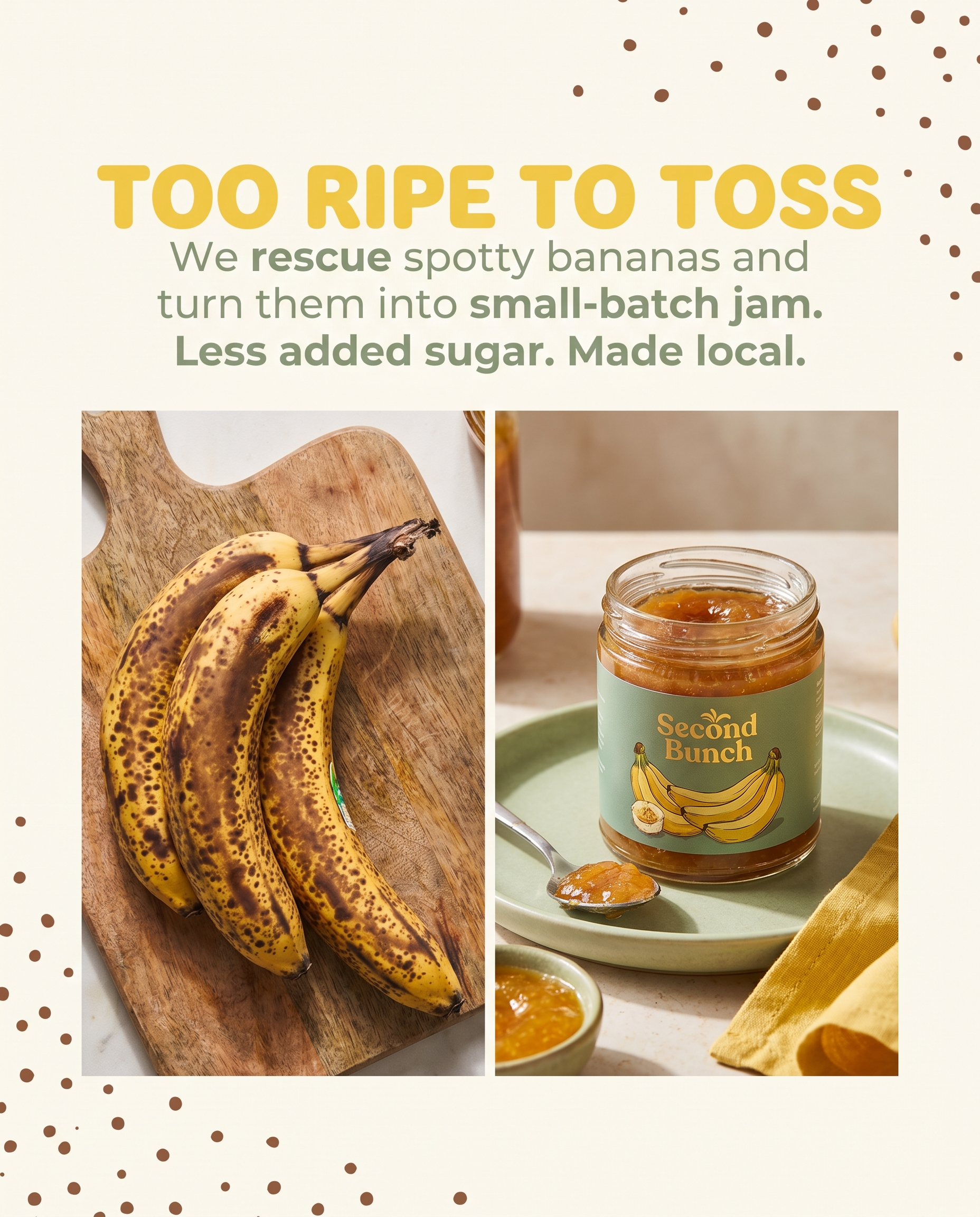
Bananas are one of the most-discarded fruits in the country — they ripen fast and grocery stores can't move them. Overripe is exactly right for jam: the sugars have developed fully and the flavor is at its peak. We source spotty, overripe bananas from local farms and markets within the week, before they hit the bin.
We say less, and we mean it. "Less added sugar than traditional jam" — not "sugar-free," which would be false. "Made local" with a real city and real farms on the label, not vague marketing copy. Every claim we make is backed by data we can show you. We're pursuing Upcycled Certified status so our rescued-fruit story has independent verification behind it.
Sustainability is the substance, not the sermon. We don't guilt-trip. We don't lecture. The tone is a friend who makes really good banana bread — generous, a little playful, proud of where the ingredients come from. The food-waste story matters, and it's more effective when people want to hear it.
Working with fast-perishing rescued fruit means short supply chains aren't a marketing choice — they're a production reality. We source from farms and markets within driving distance and donate a portion of every jar's revenue back to the farms we source from. Made local is stamped on every unit with a real city name.
Real numbers, updated with each batch. These aren't marketing estimates — they're what we can actually prove.
Every Second Bunch label carries a "rescued near [city]" stamp. Here's what that means in practice.
A third-generation family farm that grows seasonal produce and supplies grocery distribution in the Portland metro. We pick up overripe bananas from their packing line twice a week during peak season — fruit that would otherwise go into compost.
Portland MetroSeveral produce vendors at Portland Saturday Market set aside their end-of-day overripe bananas for us. It's a weekly rescue run that keeps the freshest fruit going directly into that week's batch.
Weekly RescueA regional food distributor that works with grocery chains across the coast. They flag overripe cases for us before they're written off — some of our largest single-batch rescues come from this partnership.
Coast Supply ChainWe're always looking for new rescue partners — farms, markets, distributors, and cafés with overripe fruit that would otherwise go to waste. The rescued-fruit story gets stronger with every new source.
Get in touch →We're pursuing Upcycled Certified status — an independent third-party mark that verifies our rescued-fruit supply chain meets published standards. Because "rescued fruit" should mean something you can verify, not just marketing copy we wrote ourselves.
Shop while we work on it →Every jar is Batch #047, rescued near Portland, OR this week. Made from real rescued fruit, numbered from the week it was made.